
To reduce LexisNexis false positives without replacing your screening provider, add an AI agent on top of your existing AML and sanctions screening. Diligent’s agent automatically investigates alerts, records clear, auditable commentary and decisions, and closes resolved alerts for you.
Works with LexisNexis Bridger Insight XG, RiskNarrative, Compliance Lens, Firco Compliance Link, Firco Continuity and Firco Trust.
Why do LexisNexis screening alerts produce so many false positives?
LexisNexis reports that 90% of screening alerts are false positives. In high-volume sanctions queues, the rate can approach 99%. Every alert still needs an analyst to investigate it.
The real cost goes beyond headcount. Time spent clearing alerts that pose no risk is time taken from the 1% that do.
How much can AI reduce manual alert handling?
Diligent reduces manual alert handling by 50-80% on top of your existing LexisNexis setup. It works as an AI intelligence layer over your current sanctions and name screening workflow. There is no rip-and-replace and no migration to another screening provider.
The agent investigates each alert, records an auditable decision and comment, and closes the alerts that meet your policy. Only cases that need human judgement reach your compliance team.
How does Diligent remediate a LexisNexis screening alert?
Step 0: Connect Diligent to LexisNexis
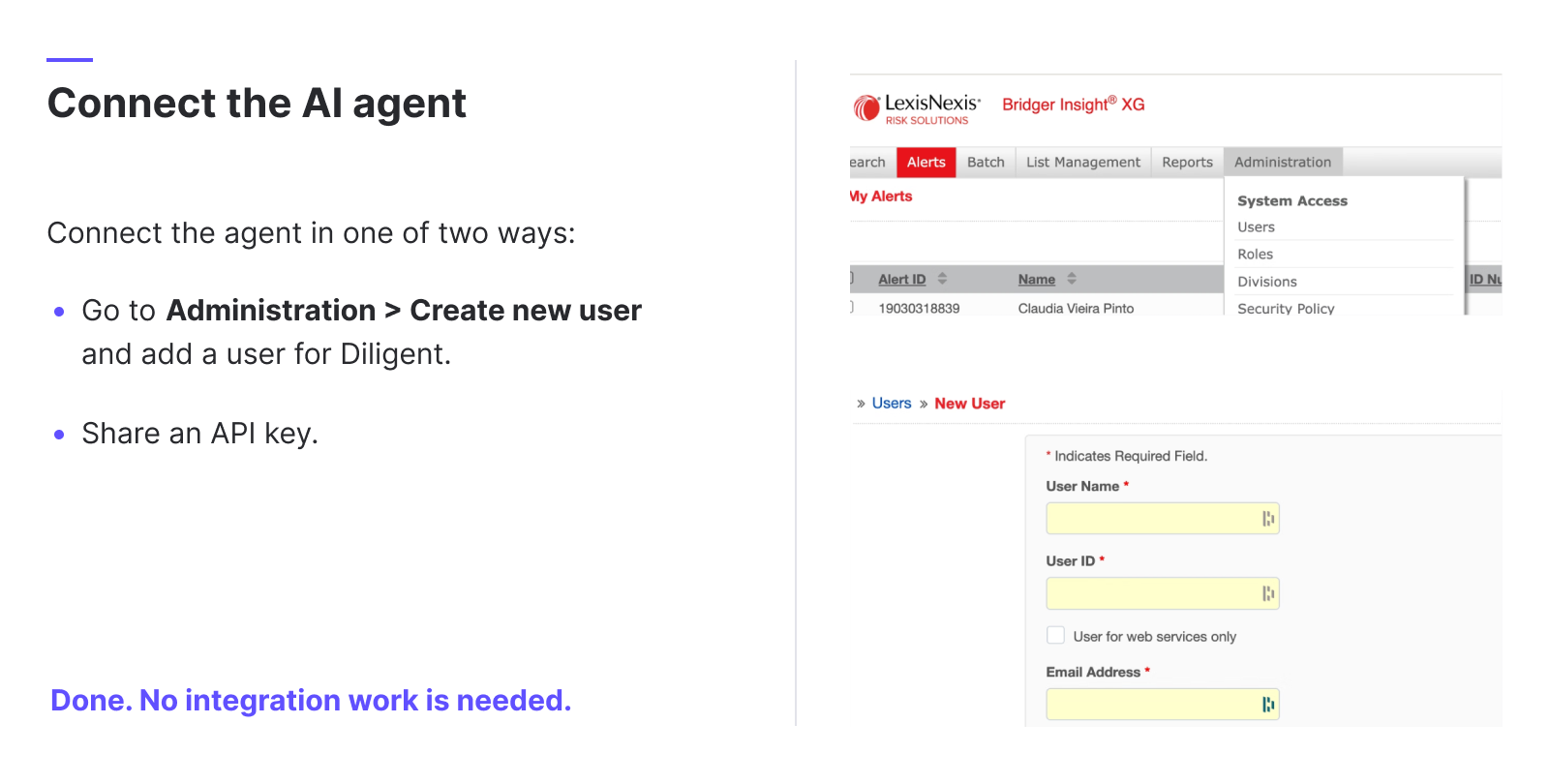
Connect the agent in one of two ways:
- Go to Administration > Create new user and add a user for Diligent.
- Share an API key.
No integration work is needed.
Step 1: Name matching to resolve mismatches in seconds
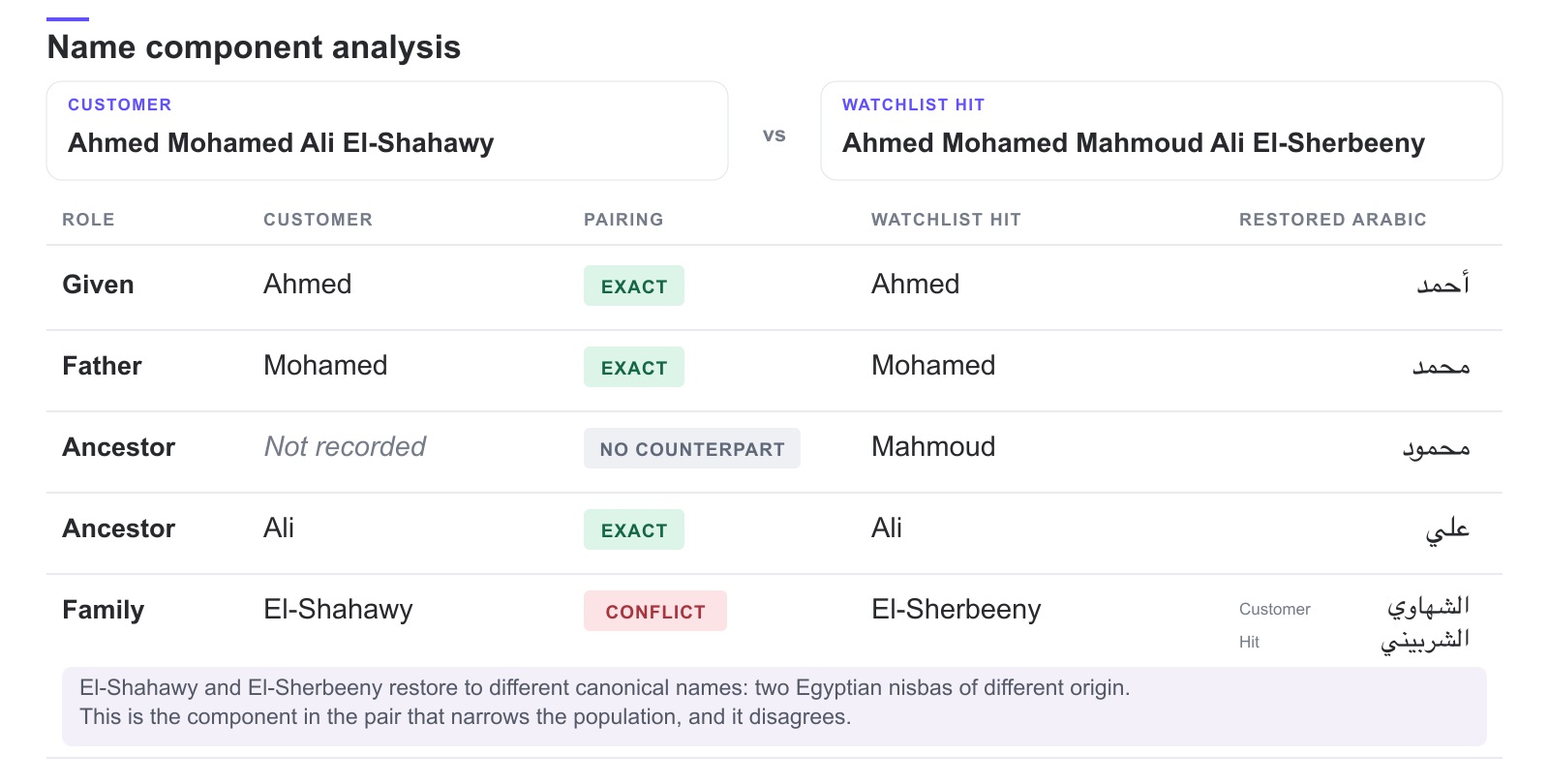
Diligent's Name Matching model is built to avoid the limitations of traditional fuzzy-logic matching. It understands names across 27 naming traditions, including cultural naming conventions, transliterations and name order, and explains why two names do or do not refer to the same person.
Obvious name mismatches are resolved in seconds.
Best for: companies with fast onboarding requirements, and transaction screening where the name may be the only identifier available.
Step 2: Context enrichment to find the evidence analysts would search for
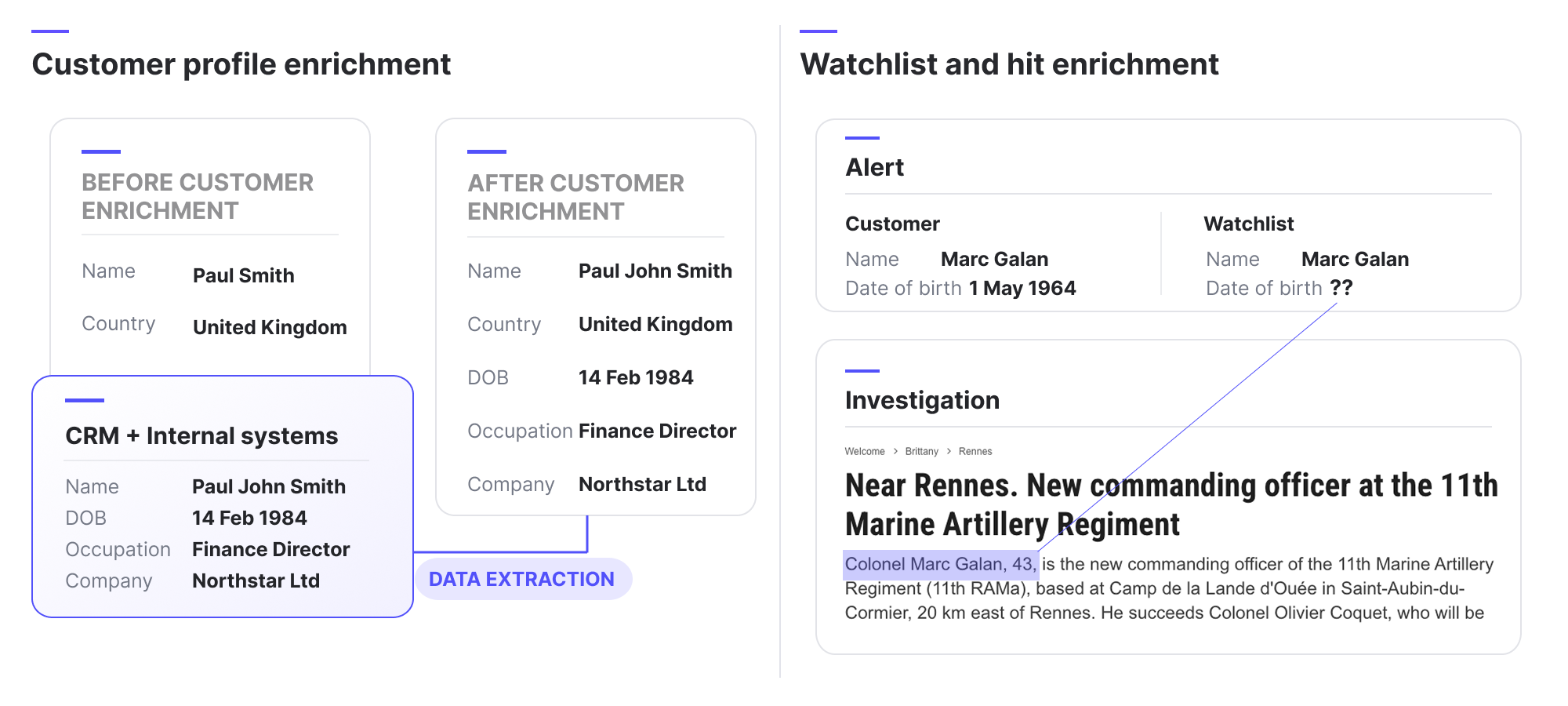
When the alert data isn't enough to decide, the agent enriches both sides of the alert.
Customer profile enrichment: the agent extracts additional identifiers from your internal systems, such as your CRM, databases and customer-support tools. Examples include passport details, OCR data and addresses.
Watchlist and hit enrichment: the agent searches open-source intelligence (OSINT) to establish missing facts. Has the person passed away? Do known life events show they must have been born before a certain date?
Best for: organisations where customer information is spread across multiple systems and analysts spend most of their investigation time searching for context.
Step 3: Risk materiality to apply your policy
A true match does not always mean a material risk. Your policy might allow remediation where:
- a PEP left office more than 12 months ago;
- adverse media relates to something outside your risk appetite, such as a minor drink-driving offence; or
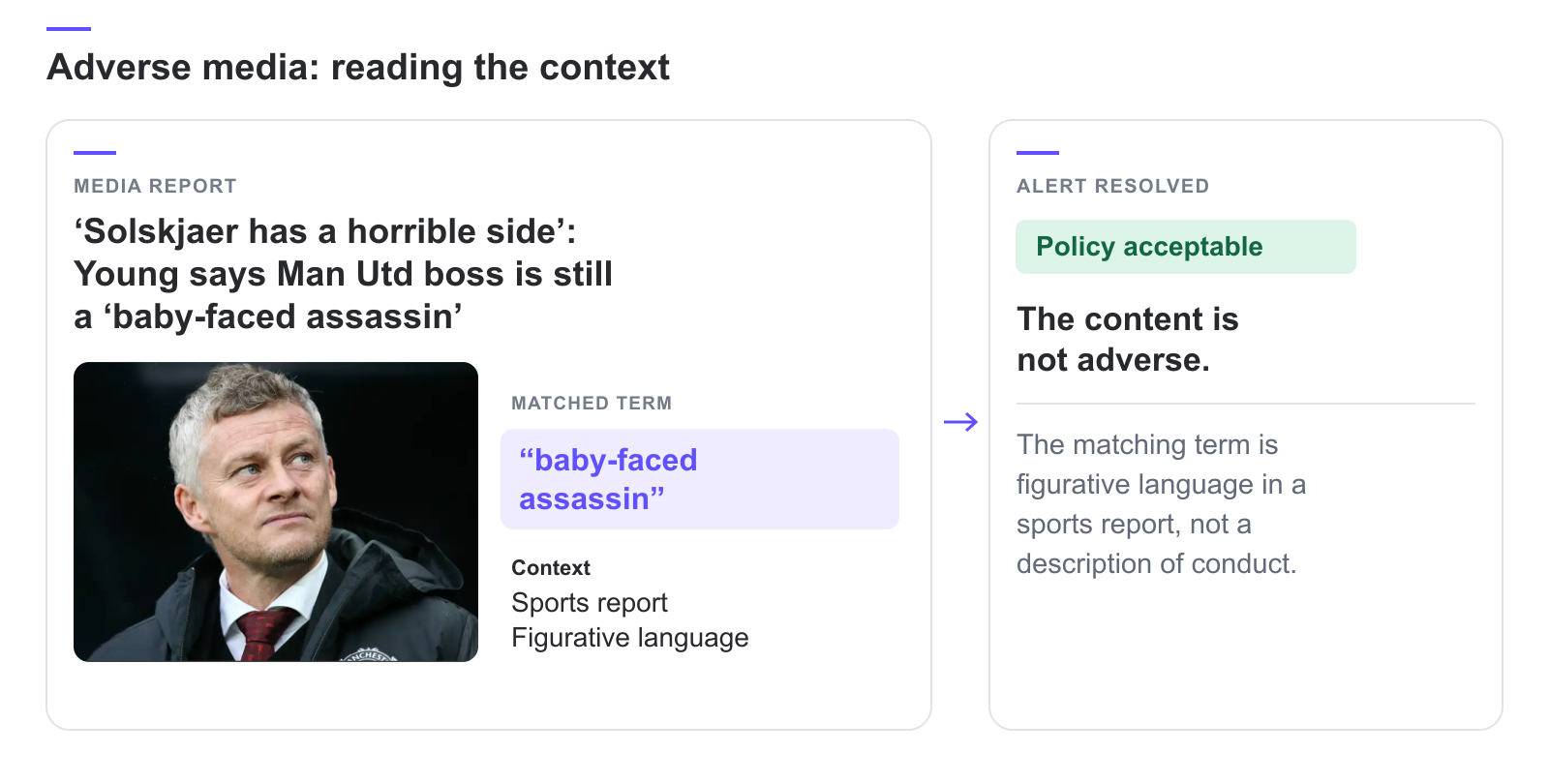
- the matched person is only mentioned in an article, for example the judge hearing the case rather than the subject of the allegations.
Diligent applies your risk-materiality policy to each alert.
Best for: organisations with a clearly defined risk appetite that want consistent policy application at scale.
Is every AI alert decision auditable?
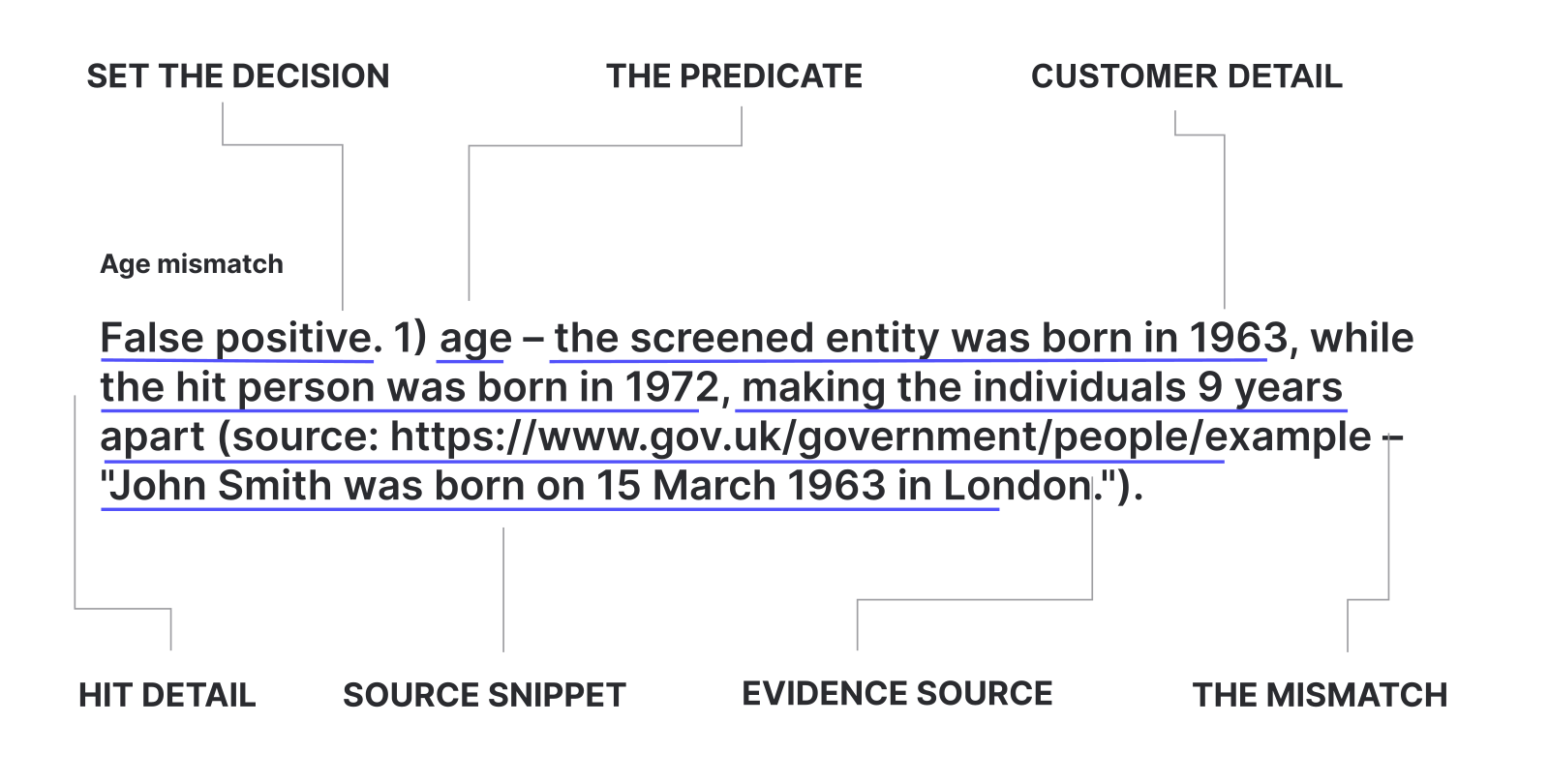
Yes. Every decision comes with an explanation your compliance team can defend to auditors and regulators. It shows what was found, which rule was applied, why the alert was resolved and where the evidence came from.
Test Diligent on your own screening data
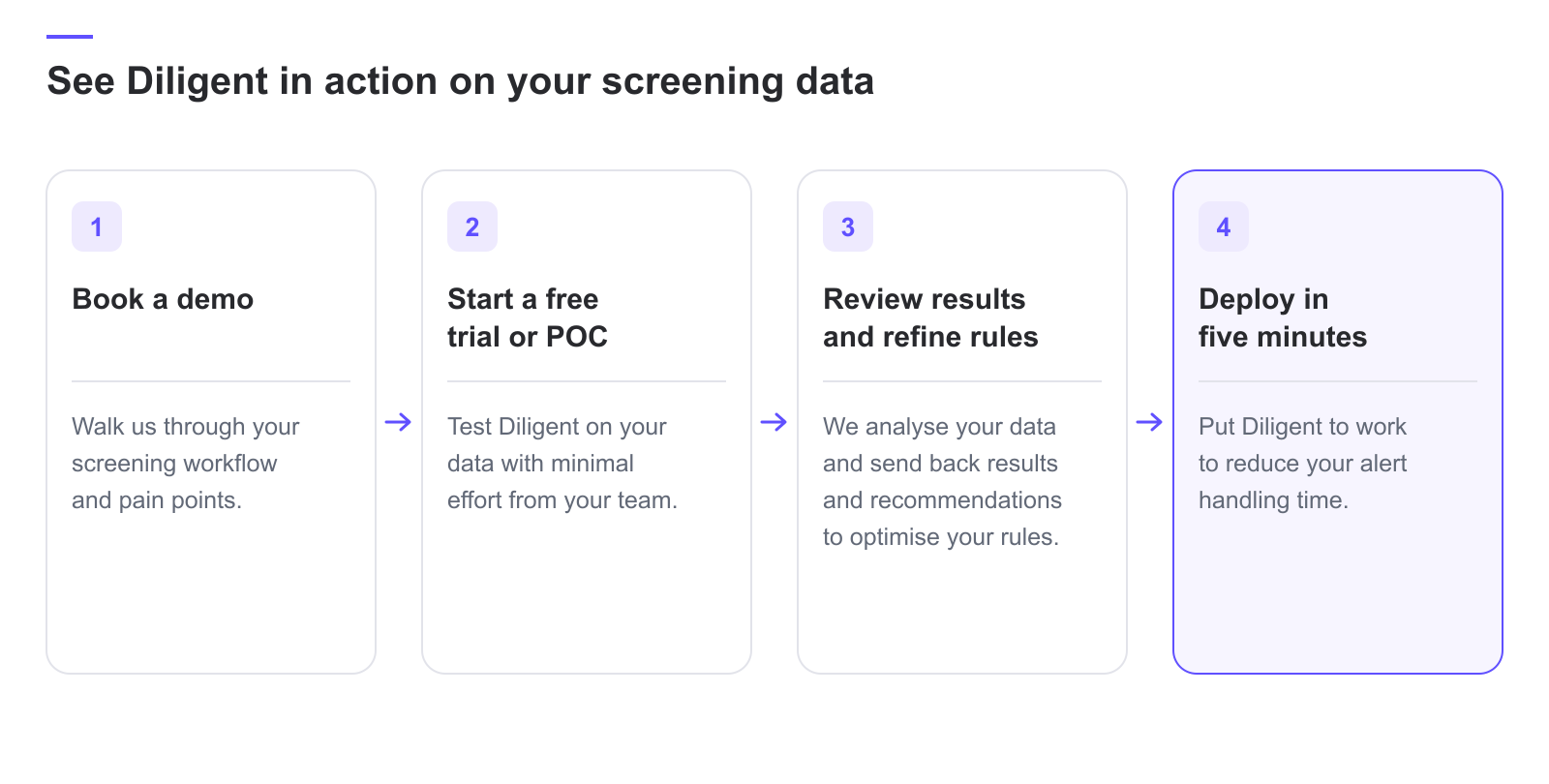
We run free, low-effort POCs and trials on your sample data before any deployment. Want to see the impact on your AML and sanctions screening workflow? Book a demo.

.png)